 en
 pl
 sv
 de
 fr



Hot-dip galvanisation of steel structures – requirements, durability and corrosion protection.
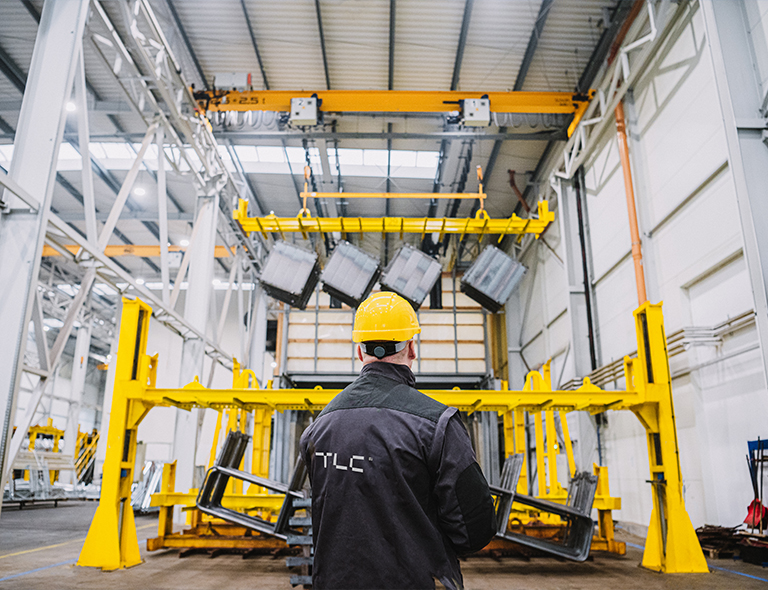
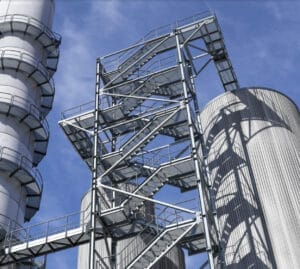
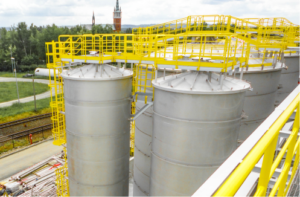
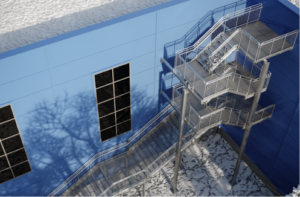
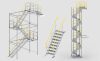
In the industrial and construction industry, durability is not a luxury – it is a necessity. As a manufacturer certified for compliance of factory production control according to EN 1090-2:2018, TLC focuses its business on steel products. We manufacture steel structures in EXC1 to EXC3, which applies to heavy-duty structures used in industrial infrastructure.
The steel we use to manufacture walkway systems for industry, among other things, is extremely durable, but without proper protection it is susceptible to corrosion. This affects both safety and operating costs.
Hot-dip galvanising is a proven method of protecting steel, ensuring long-term resistance to atmospheric and chemical factors.
Hot-dip galvanising is an investment in:
- longevity of steel structures – the coating lasts for decades,
- full protection of surfaces – even internal and hard-to-reach ones,
- mechanical resistance – the zinc layer does not peel or chip,
- lower utilisation costs – no need for painting or frequent repairs.
How does the zinc coating work? Process, thickness, EN ISO 1461 standard
Hot-dip galvanising involves immersing steel components in a bath of molten zinc at a temperature of 450-460°C. As a result of the diffusion of zinc atoms into the steel surface, a permanent iron-zinc alloy layer is formed, with a layer of pure zinc on top. This structure provides excellent corrosion protection even in the case of surface damage.
According to EN ISO 1461, the average thickness of the zinc coating for steel components over 6 mm thick is 85 μm. In moderately corrosive urban conditions, with an average annual zinc layer loss of approximately 1.5 μm, an 85 μm coating provides corrosion protection for more than 55 years.
This structure means that if its top layer is damaged, it continues to fulfil its primary purpose of corrosion protection.
| Steel thickness t [mm] | Minimum average coating thickness [µm] | Coating mass related to surface [g/m²] |
| t > 6 | 85 | 610 |
| 3 < t ≤ 6 | 70 | 505 |
| 1.5 ≤ t ≤ 3 | 55 | 395 |
| t < 1.5 | 45 | 325 |
Table 1. Thickness of zinc coating according to EN ISO 1461.
Passivation – additional protection of steel against so-called white rust
After the galvanising process, it is possible to carry out chemical passivation – a thin, transparent protective layer that is formed by immersing steel components in a special solution. This treatment extends the effect of the bright and shiny zinc coating several times over and effectively protects it against so-called “white rust”, i.e. oxide deposits which can appear under the influence of humidity and limited air access.
Influence of alloying elements – how does steel composition affect galvanising quality?
The appearance and protective properties of zinc coatings – such as thickness, adhesion to the steel substrate and aesthetics (smoothness, gloss) – are largely dependent on the presence of certain alloying elements in the composition of the material. Silicon, phosphorus and carbon content are critical. Steels with higher silicon content react more strongly with zinc, and the presence of phosphorus further intensifies this process.
To achieve the best properties of the zinc coating, the silicon content of steel should:
- be less than 0.03% (while keeping the total silicon and phosphorus content below 0.045%)
- or be between 0.14 and 0.25%, as long as the sum of silicon and carbon does not exceed 0.5%.
Otherwise, undesirable effects can occur – an overly thick, rough and brittle layer of zinc with a dull grey hue.
| Steel groups | Silicon content (%) | Appearance of hot-dip galvanised coating | |
| Low-silicon | < 0.03 |  | Silvery, shiny |
| Sandelin | 0.03 – 0.14 |  | Grey, dull, rough, brittle |
| Sebisty | 0.14 – 0.25 |  | Silver-gloss to matt grey |
| High-silicon | > 0.25 |  | Dull, grey, brittle |
Table 2. Appearance of zinc coating on steels with different silicon content.
From design to hot-dip galvanising – TLC’s comprehensive facilities
Hot-dip galvanisation is an investment in the durability, safety and aesthetics of steel structures. Provided that technological requirements are already taken into account at the design stage. Otherwise – even the best galvanising plant will not achieve the desired effect.
TLC has its own facilities for hot-dip galvanising of steel structures – a modern galvanising plant in Gorlice. This allows us to offer our customers comprehensive services: from design and production to corrosion protection.
If you want to be sure that your structure will be properly prepared for galvanising – take advantage of TLC’s expert experience and contact our team.
Read our other news
TLC CUP 2026 – two days of excitement and wholehearted football
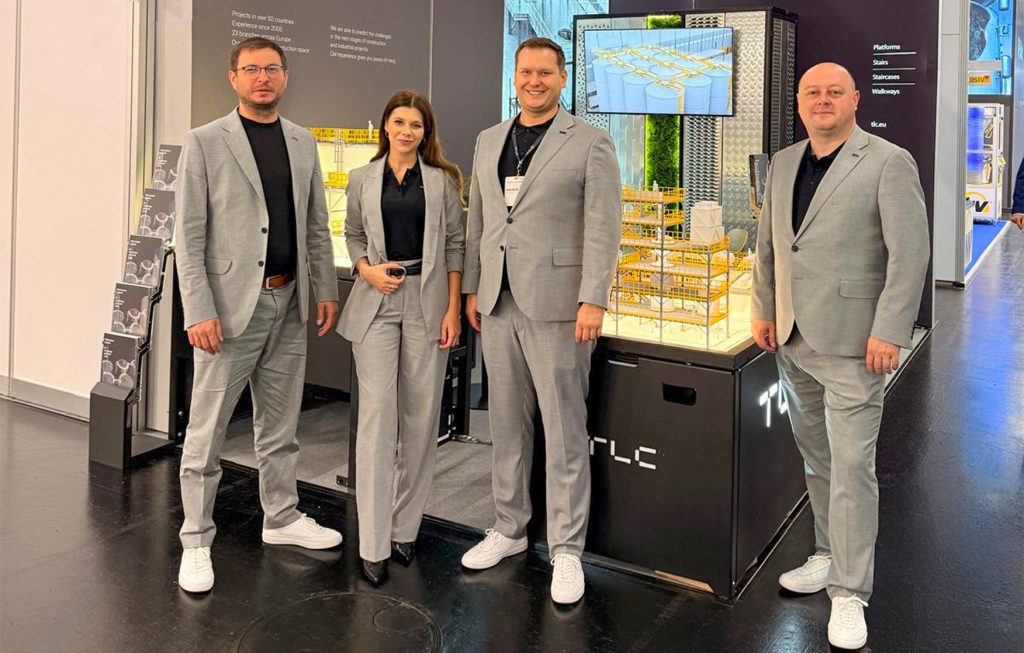
TLC at POWTECH TECHNOPHARM 2026 – industrial walkway systems
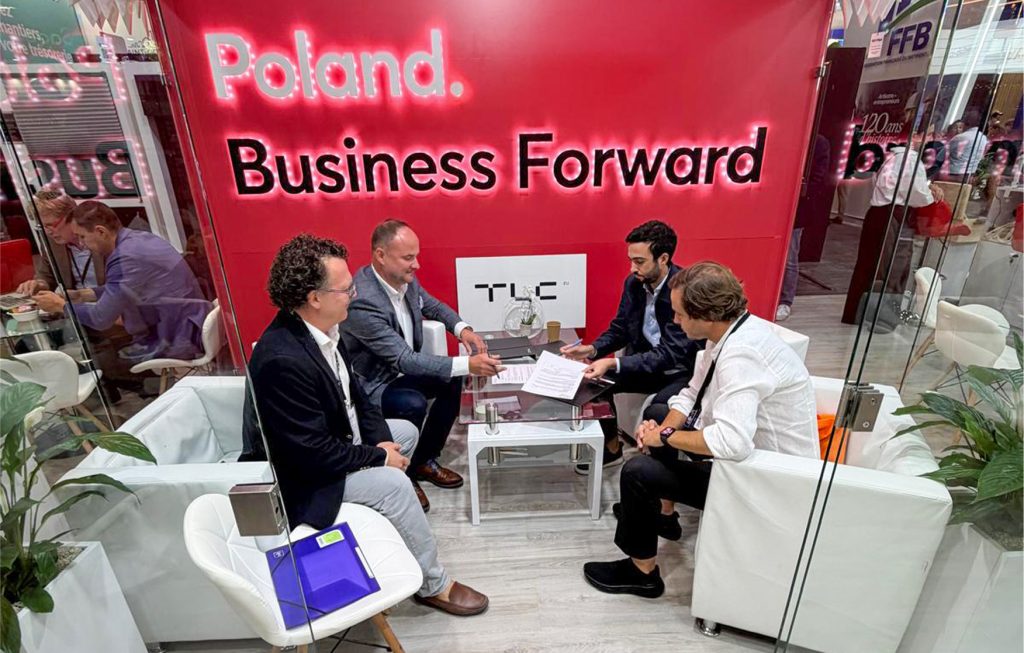
TLC at BATIMAT 2026 – MoU with Sodimat and another step in international growth
