 en
en
 pl
pl
 sv
sv
 de
de
 fr
fr
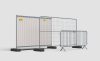
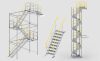
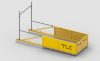
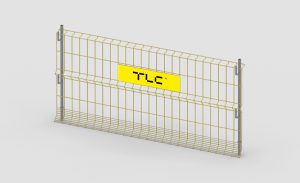
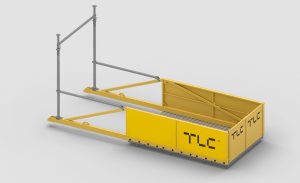
Energy / Nuclear
Certified steel access platforms and walkway systems for the energy and nuclear industry
- We design, manufacture, and install any type of steel structure, fully tailored to your individual project.
- We offer complete support – from design and production to on-site installation of customized steel structures.
- TLC is a proven partner for companies operating within the nuclear and energy industry supply chain – delivering quality, safety, and precision.
See how TLC designs and builds steel structures for industrial projects.
What solutions do we have for you?
Comprehensive access and walkway solutions supporting the energy and nuclear industries.
Engineered for maximum safety, durability, and operational efficiency in demanding environments.
Modular, tailored solutions for any of your needs.
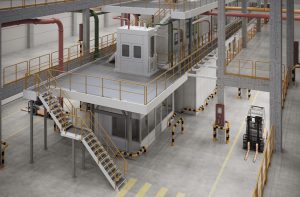
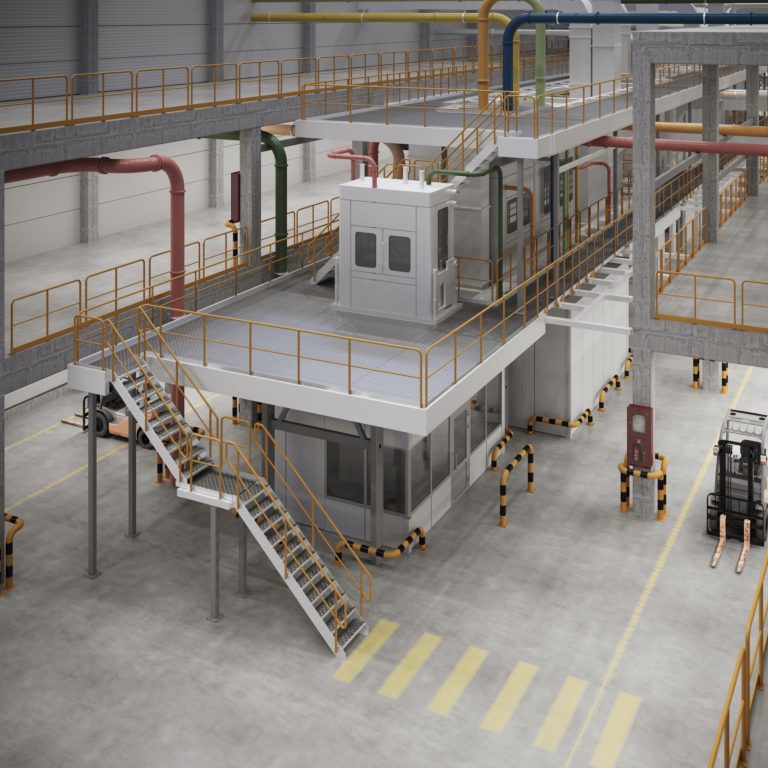
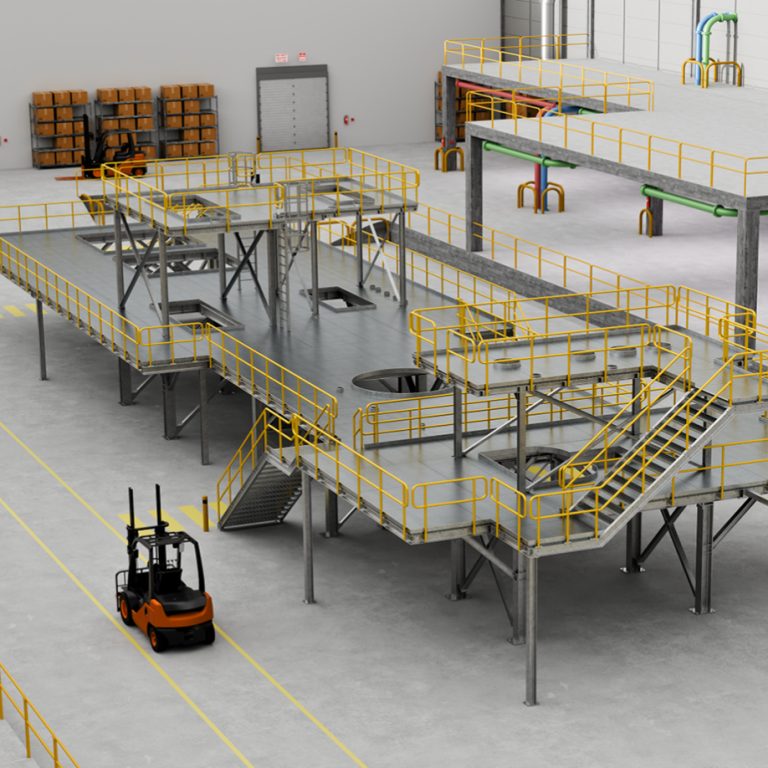
Internal access platforms to the machine parks and the production facility
Internal access platforms are designed to provide safe and ergonomic access to key components of production and process lines. They ensure comfortable and secure movement within machine parks and production halls, supporting servicing, maintenance, and repair operations.
Our modular steel structures are durable, corrosion-resistant, and adaptable to individual layouts and technical requirements. Thanks to their flexible design, they can provide access to hard-to-reach areas and guarantee compliance with EN ISO industrial safety standards.
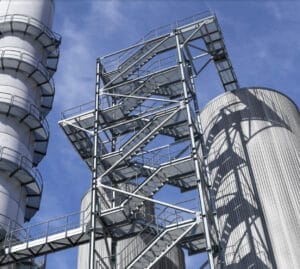
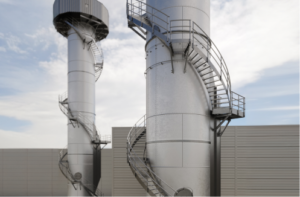
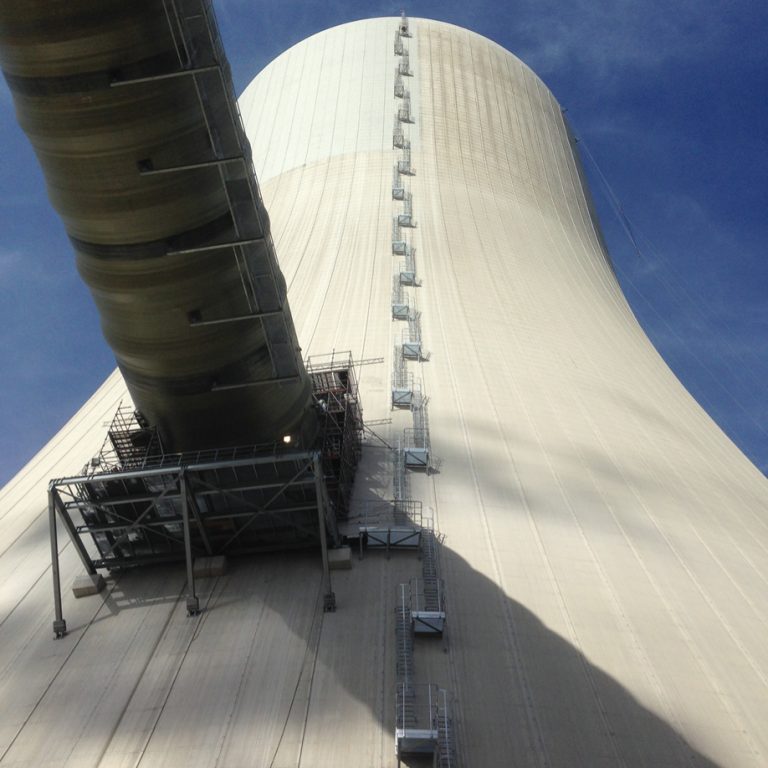
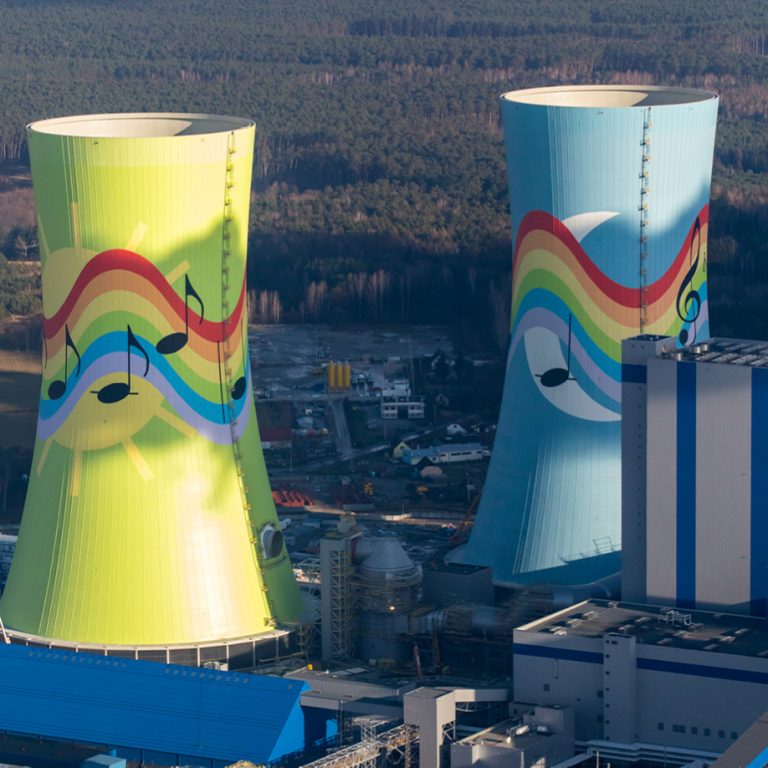
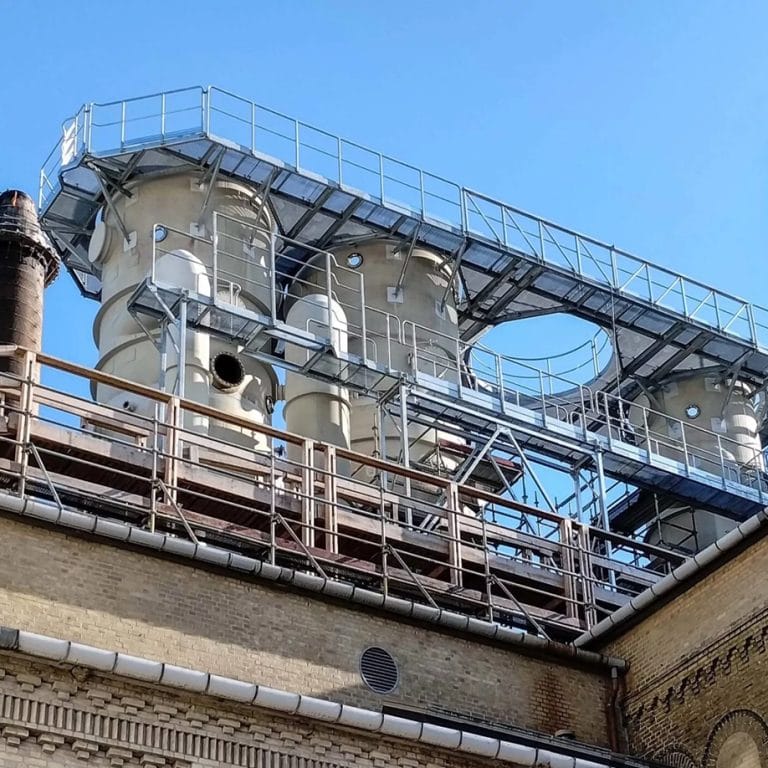
Walkways and platforms for chimneys
Discover robust spiral and helicoidal stairs and platforms designed for industrial chimneys, engineered to provide safe access across heights and levels. Built from premium materials with high-performance corrosion protection. Fully customizable to meet country-specific industrial safety standards
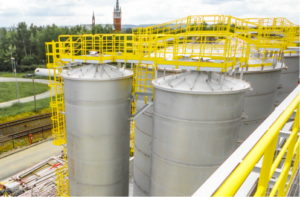
Walkway systems for tanks
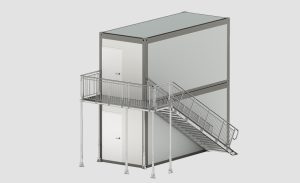
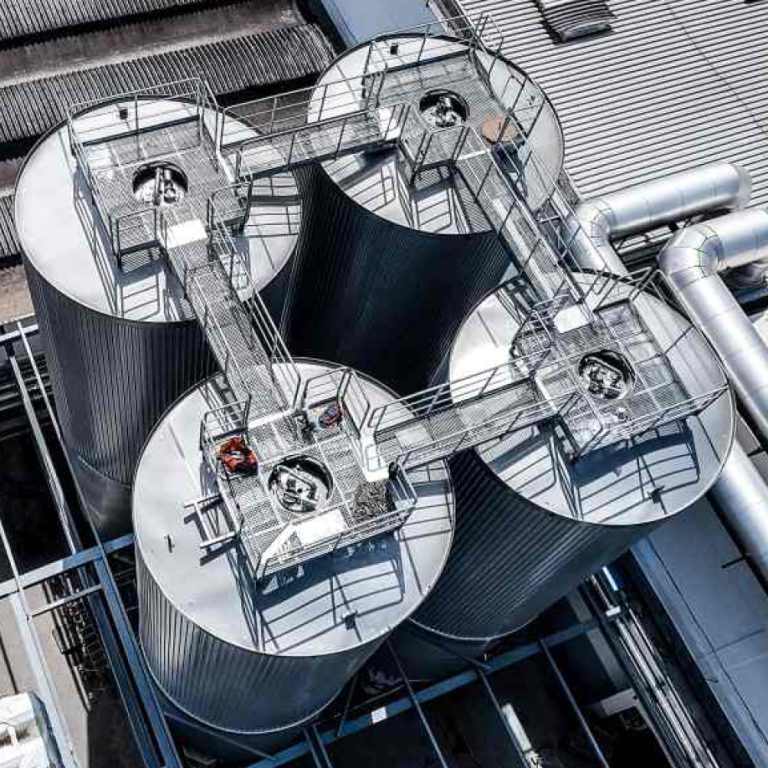
Robust external access platforms ensure safe movement around and between storage tanks within an extensive above-ground tank farm. Tailored stairs, platforms, and walkway systems designed to meet industrial safety standards. Fully customised, galvanised, and ready for on-site installation
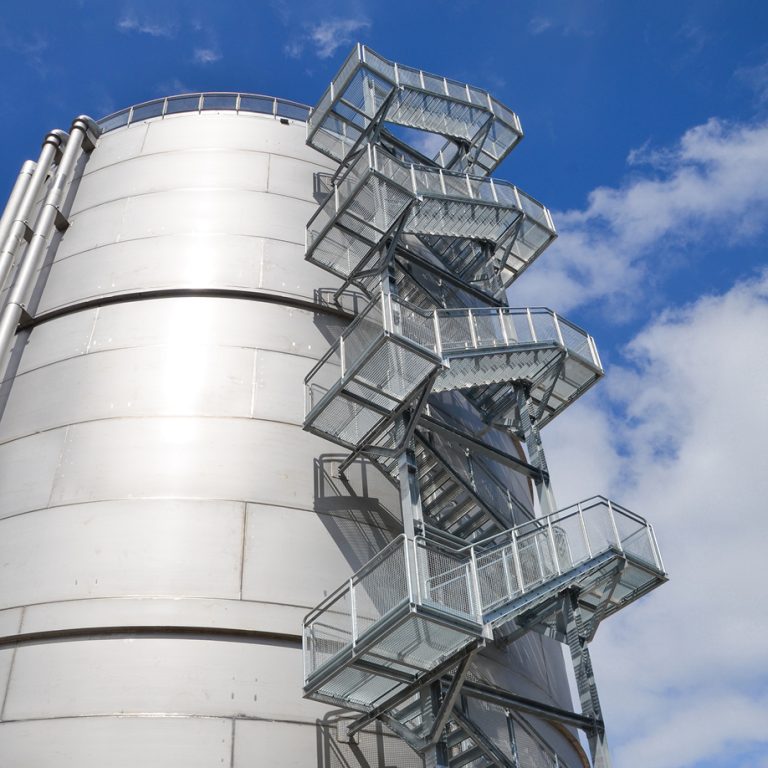
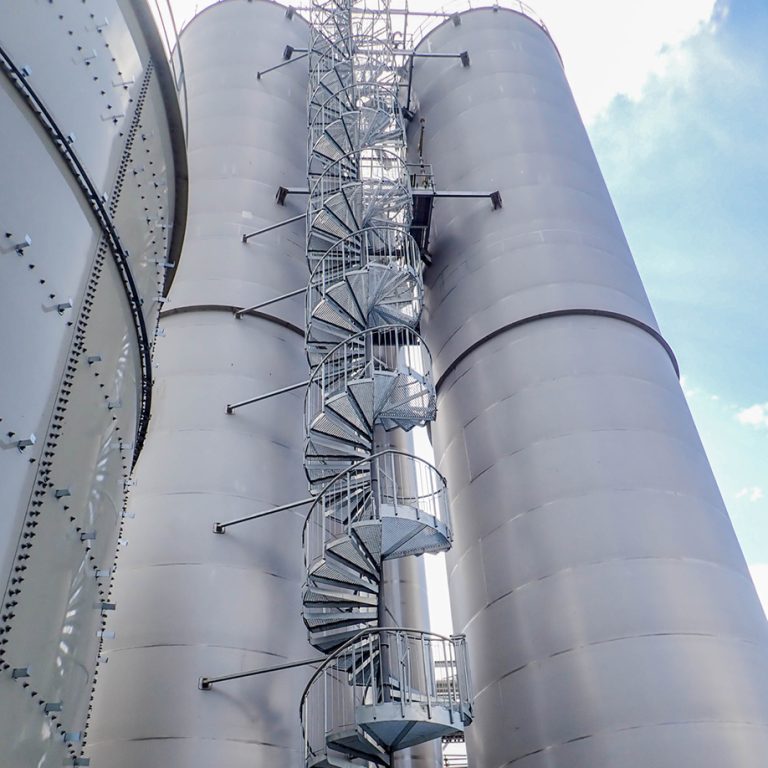
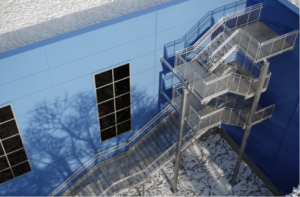
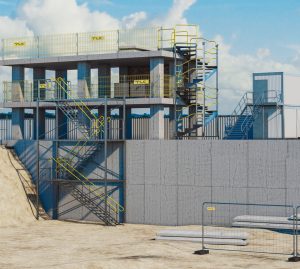
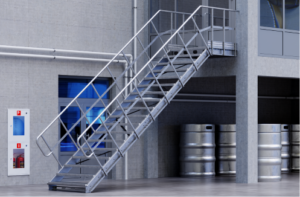
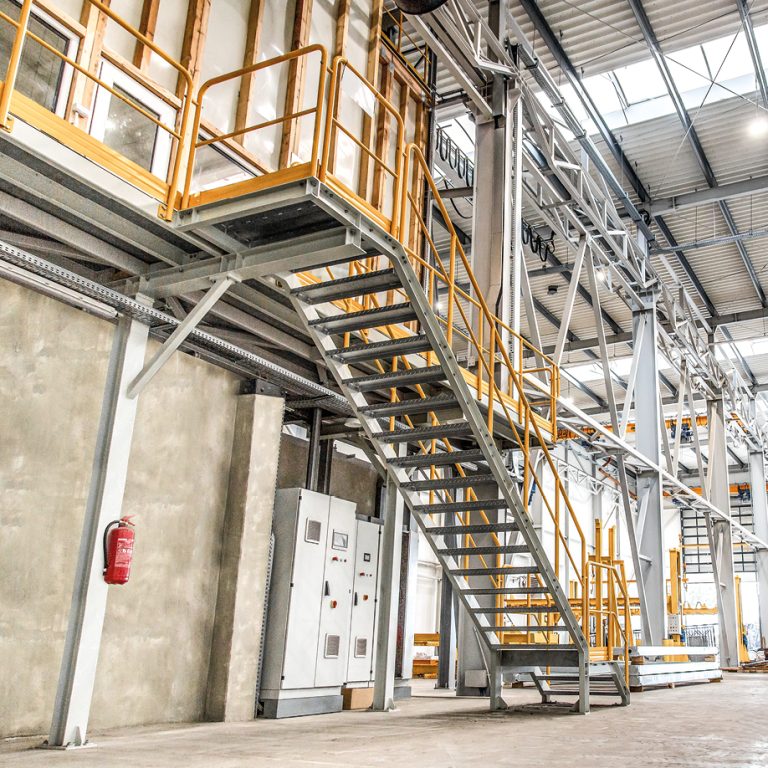
Industrial stairs
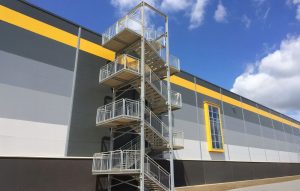
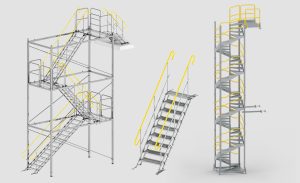
Engineered complex straight and spiral steel stair systems designed for both internal and external applications in industrial facilities. Fully customised to include various stair types, guardrails, and structural connections tailored to each facility. Designed and installed with consideration for wind loads, weather conditions, and long-term durability.
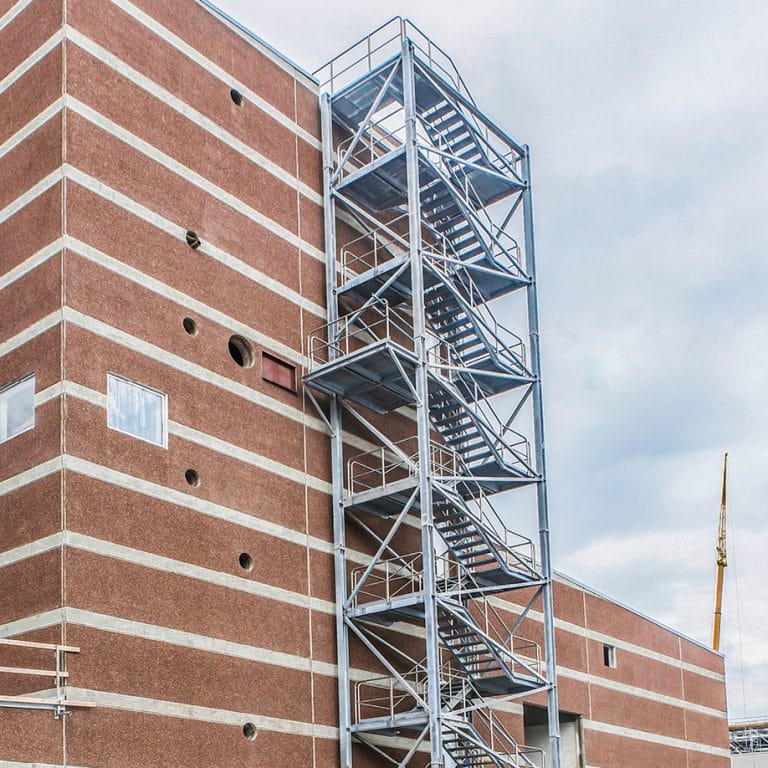
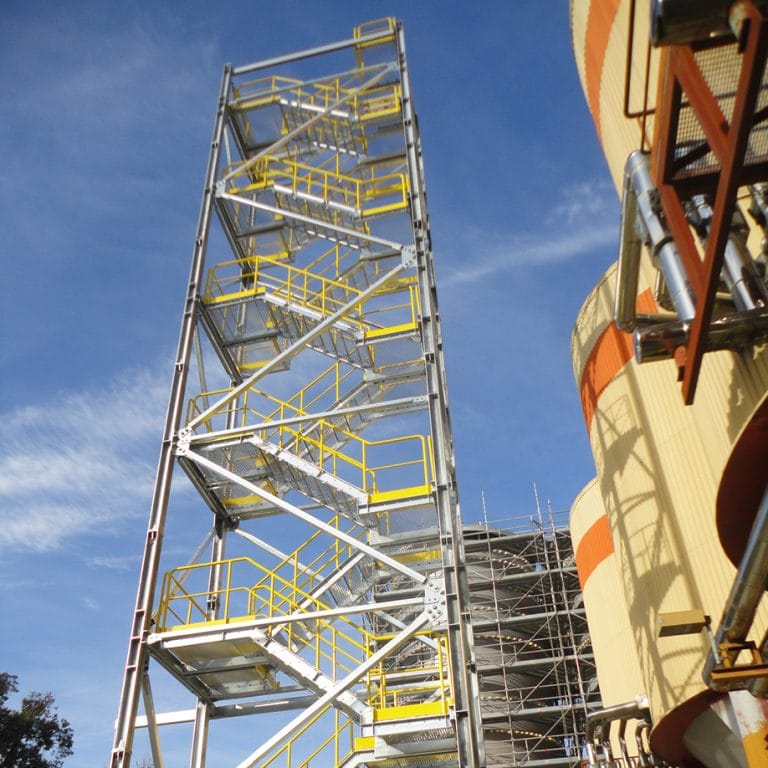
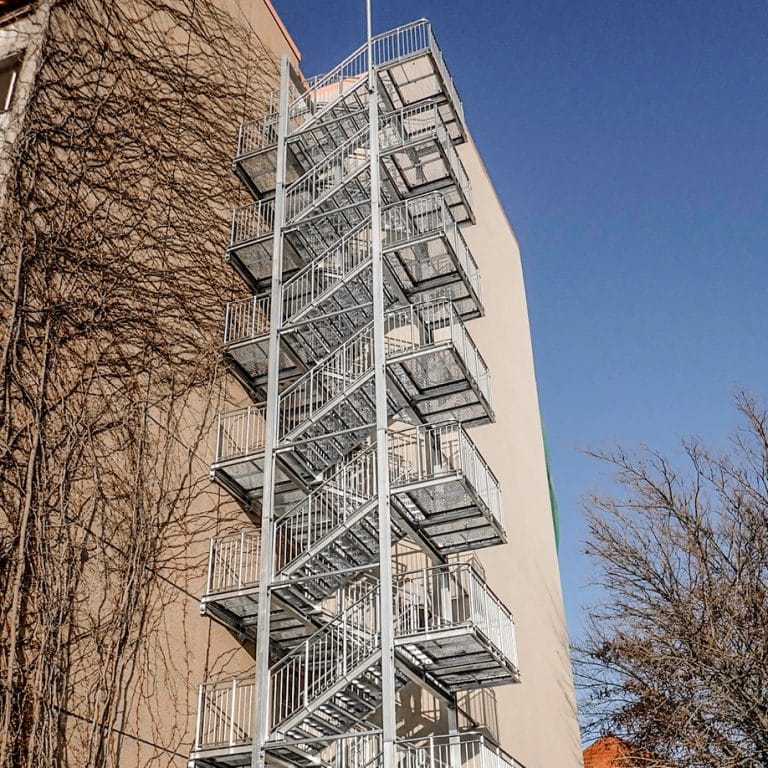
From concept to technical verification – we provide complete design support
From the first idea to full technical verification, we provide comprehensive design assistance to ensure that every project is safe, efficient, and cost-optimised. Our support covers all stages of development — from initial concept sketches and structural analysis to final documentation and on-site implementation guidance.
Our experienced engineering team performs detailed static and strength calculations, prepares precise technical documentation, and works with advanced 3D models to eliminate installation risks and ensure flawless assembly.
By combining innovation with proven engineering practices, we guarantee solutions that meet both industry standards and client expectations.
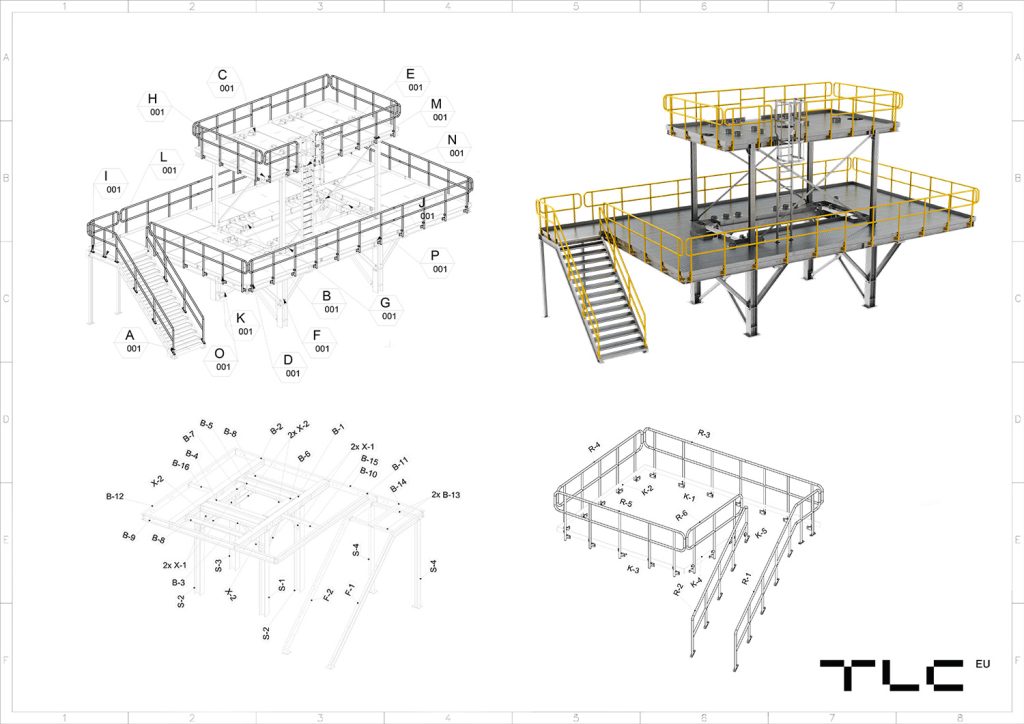
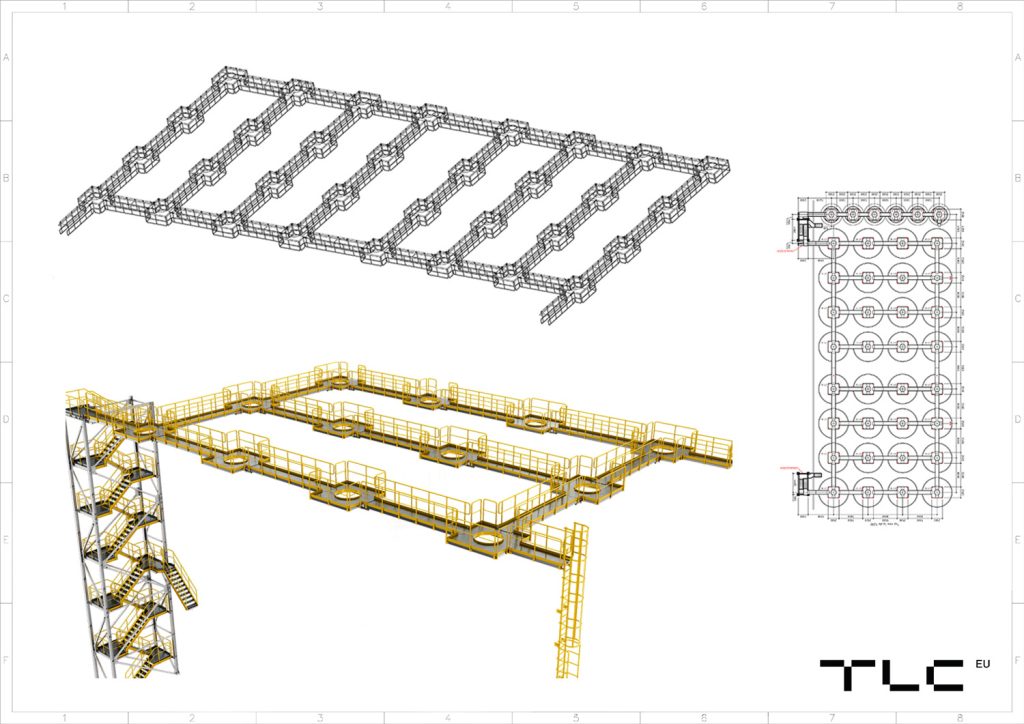
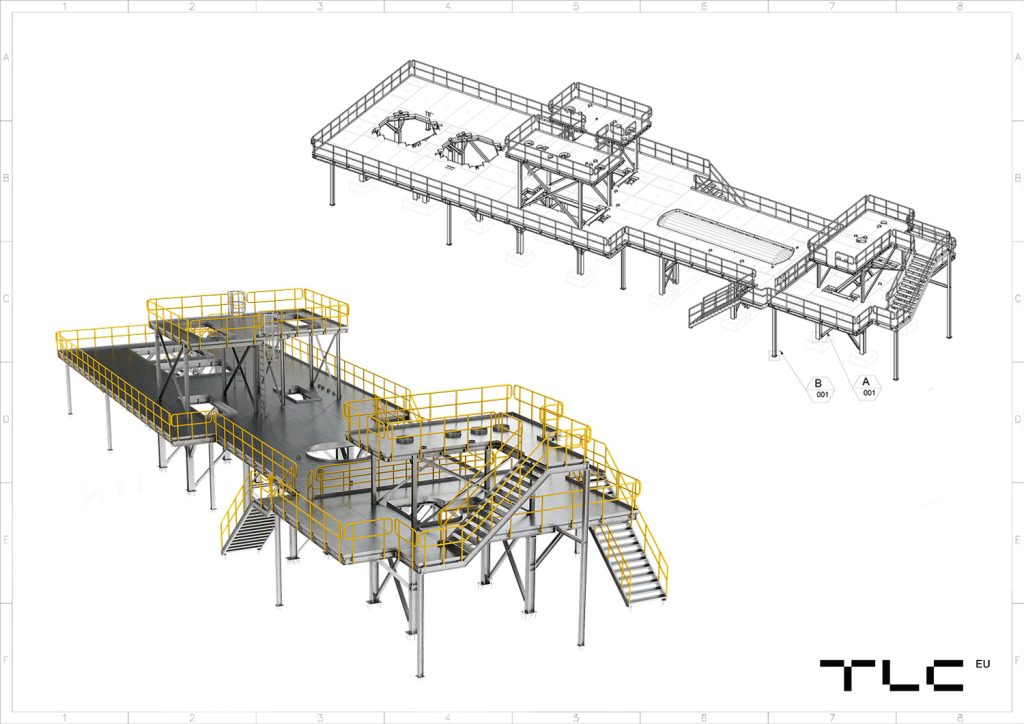
Real projects for proven solutions
Discover selected examples of our completed projects showcasing custom-engineered steel structures. Each case study highlights our approach to design precision, safety, and efficiency
— from concept to on-site installation.
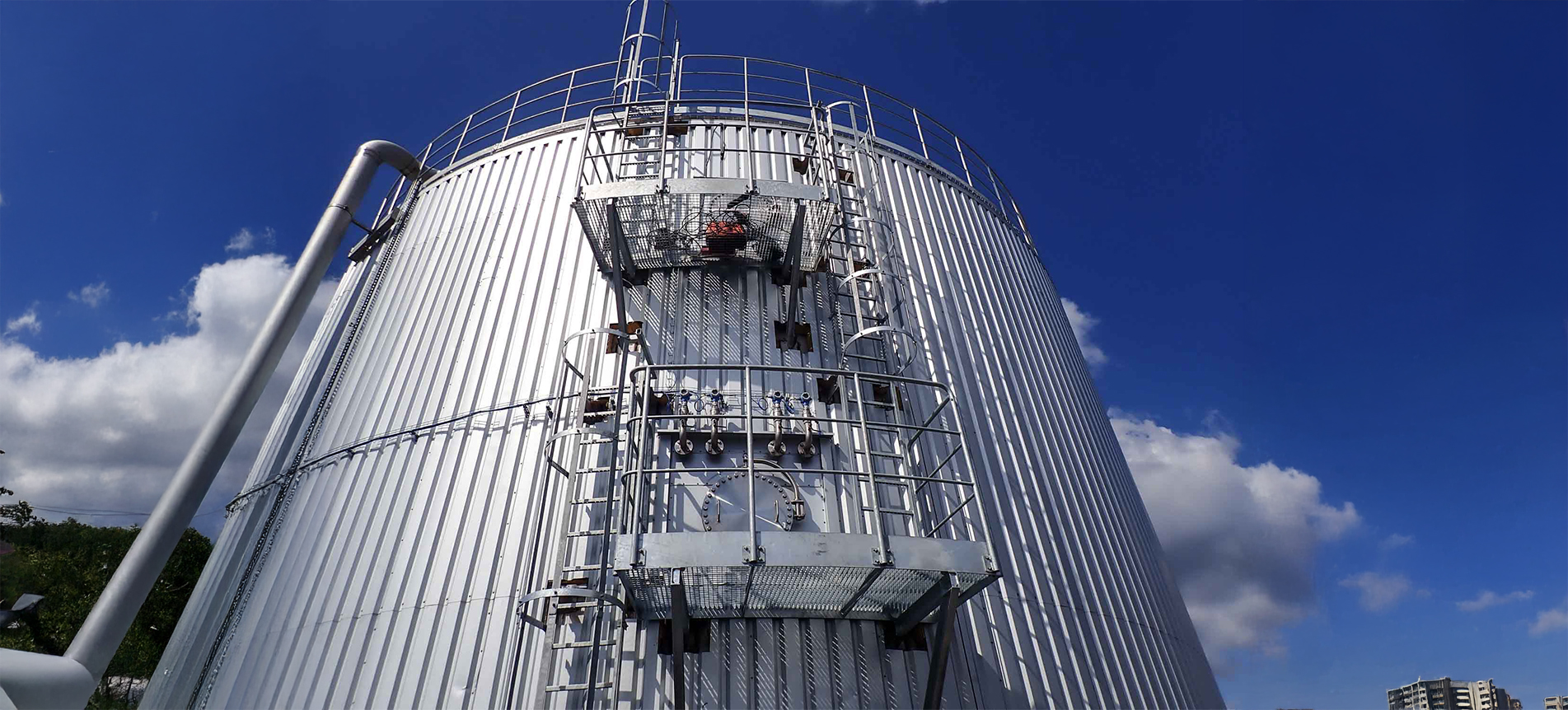
Steel walkway system for biogas plant tanks in Zbiersko
Project number: B/3058
Tanks require solid structures that ensure safe communication.
We had the opportunity to create a walkway system during the construction of a biogas plant in Zbiersko.
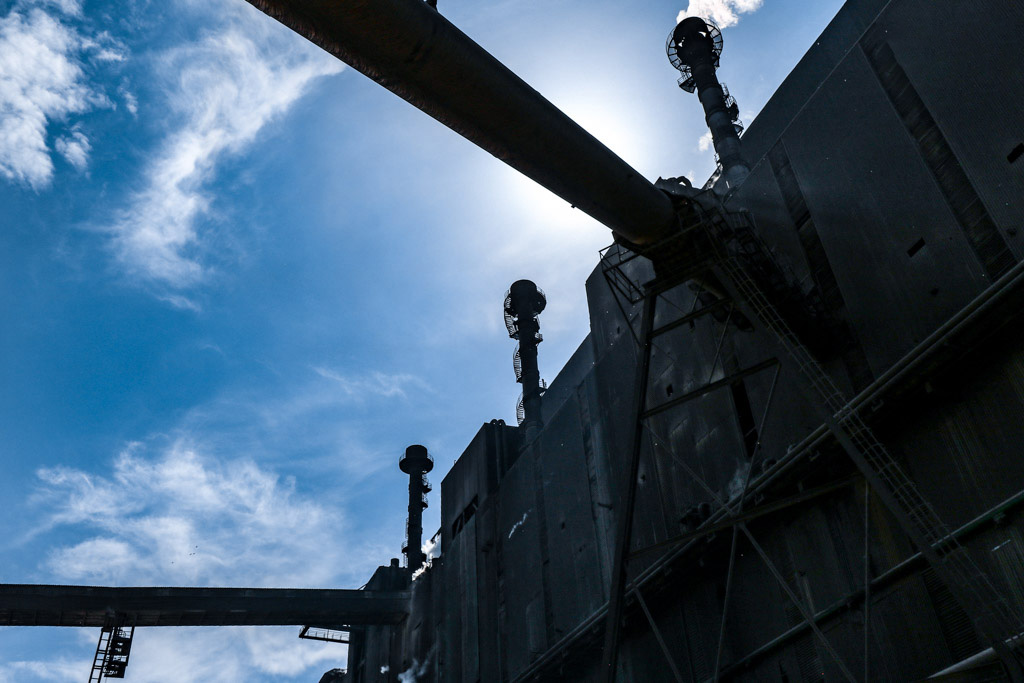
Design and delivery of complete steel walkway systems for gas chimney stack
We have prepared and fulfilled a complete and durable walkway systems with platforms, which will guarantee the safety of users in a pure gas chimney stack.
The entire system consists of 3 circumferential platforms, 5 rest platforms, 7 spiral and 1 straight entrance flights of stairs.
Information brochure
| TLC Standard / Certificate | Scope | Relevance in the Energy & Nuclear Sector |
|---|---|---|
| ISO 9001:2015 | Quality Management | In the energy and nuclear sectors, continuity of operations, process repeatability, and full traceability are of key importance. ISO 9001 introduces principles of process-based management, risk management, and continuous improvement directly linked to the reliability of structures and the operational safety of energy and nuclear facilities. In a high-safety and high-reputation industry such as nuclear energy, the ISO 9001 certificate confirms that TLC: • applies controlled and documented processes, • conducts quality monitoring and internal audits, • ensures measurement consistency, • supervises design and development processes, • oversees external processes, products, and services. |
| ISO 14001:2015 | Environmental Management | The energy sector – whether conventional, nuclear, or renewable – has a significant environmental impact. ISO 14001 provides a systematic approach to identifying, controlling, and minimizing environmental impact and confirms that TLC: • plans actions to achieve environmental objectives, • monitors, measures, analyzes, and evaluates environmental performance, • conducts regular internal audits. Possession of the ISO 14001 certificate is a standard requirement among major energy investors and infrastructure operators, including EDF, Orlen, Enea, PGE, and EDF Nuclear. |
| ISO 45001:2018 | Occupational Health and Safety Management | A key HSE standard – mandatory in energy and nuclear projects. The energy and nuclear industries involve work in environments with a high potential for hazards (pressure, temperature, electricity, radiation, hazardous substances). ISO 45001 is based on the PDCA concept and requires the implementation of effective procedures in areas such as: identifying hazards already at the conceptual design stage, eliminating hazards and reducing occupational health and safety risks, emergency preparedness and response. |
| PN-EN 1090-1 / 1090-2 / 1090-3 (up to EXC3) | Execution of Steel and Aluminium Structures | The PN-EN 1090-1 / 1090-2 / 1090-3 standards form the foundation of qualification for manufacturers of steel and aluminium structures in the energy and nuclear sectors. They ensure compliance with European safety requirements, execution quality, and full process traceability — constituting an essential element of supplier certification for high-risk projects. Execution Class EXC3 meets the quality requirements for industrial and energy structures exposed to high static and dynamic loads. |
| PN-EN ISO 3834-2:2021 | Quality Requirements for Fusion Welding of Metallic Materials | Defines detailed requirements regarding: • control and inspection of welds – all stages of the welding process (before, during, and after completion) must be supervised and verified by competent personnel, • handling of nonconformities and implementation of corrective actions, • calibration and validation of measuring and testing equipment, • maintaining and archiving quality records, • traceability of processes, materials, and welds at all stages of production. Application of this standard is crucial for the operational safety of steel structures and auxiliary installations in the energy and nuclear sectors, where full documentation, supervision, and compliance with stringent quality standards are required. |
| EPD – Environmental Product Declarations (in accordance with ISO 14025 and EN 15804) | Environmental declarations for steel products (guardrails, stairs, fencing systems) | In conventional, renewable, and nuclear energy projects, EPDs: • enable quantitative assessment of the environmental footprint of components (e.g. steel structures, barriers, platforms), • support ESG reporting and sustainability strategies, • allow investors to compare alternative technological solutions using verified environmental data. Possessing EPDs for steel products confirms that the manufacturer has completed a full life-cycle assessment (LCA) and can present verified data on CO₂ emissions, energy and water consumption, and recycling performance. |
| PN-EN ISO 1461 | Hot-Dip Galvanizing of Steel Elements | In the energy and nuclear sectors, the application of galvanizing in accordance with ISO 1461 minimizes the risk of corrosion in aggressive atmospheres (e.g. near cooling towers, steam pipelines, thermal equipment, or areas with elevated temperature, humidity, and air contamination). The standard ensures durable corrosion protection for steel structures operating in demanding environmental conditions, guaranteeing long service life for energy and nuclear infrastructure components. |


Advantages and benefits
High corrosion resistance
Our systems are made from materials that withstand atmospheric and chemical exposure. Depending on the application, we offer structures made of galvanized steel, ensuring a long service life even in harsh environments. Additionally, surfaces can be protected with powder coating or a duplex system to provide enhanced resistance and long-term durability against external factors.
Compliance with safety standards
All our walkway systems are designed in accordance with international standards, such as PN ISO 14122. This means that our solutions meet strict safety requirements, ensuring stable and secure access to tanks at various heights.
Advanced safety solutions
Our staircases and platforms are equipped with numerous safety features, such as handrails, protective cages, anti-slip steps, and safety barriers. These solutions are essential, especially in industries where access to tanks occurs at significant heights or in challenging operational conditions.

- Position
- Project Sales Manager
- Description
- Focused on customized industrial solutions. I guide clients through the enquiry and pricing process to deliver accurate and reliable offers tailored to their needs.
- Social Media
